


Cabinetry for Canada: Materials, Documents and Delivery
Plan a Canadian cabinet order with component-level material records, CANFER document checks, importer responsibilities and a clear installation scope.
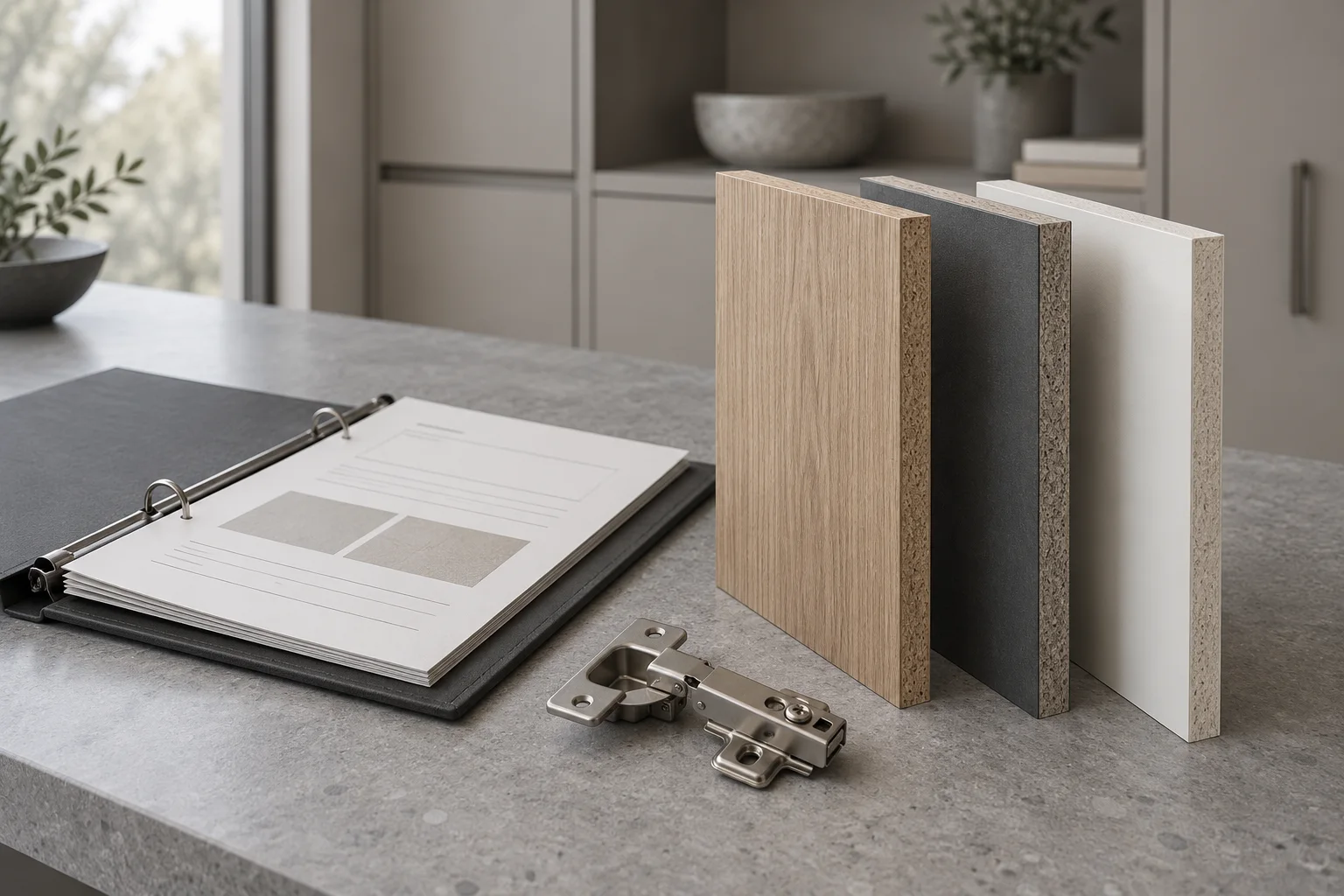
For cabinetry destined for Canada, begin with two linked records: an approved cabinet schedule and the material documents for the components used in it. Identify the Canadian importer early, then agree who will review the applicable composite wood requirements, manage customs clearance and coordinate delivery to the site.
This guide is for builders, cabinet buyers and project coordinators. It focuses on the Canadian procurement questions that sit alongside the general project brief. It is not a statement that every SNEJ model or material is certified for Canada.
1. Match material evidence to the cabinet components
List the cabinet boxes, backs, shelves, drawer parts and door fronts separately. For each, record the proposed board type, thickness, finish and supplier or product reference. A colour sample establishes an appearance choice; it does not identify the full construction or emissions documentation.
Canada’s Formaldehyde Emissions from Composite Wood Products Regulations address covered composite wood products, including relevant panels incorporated into finished goods. Have the Canadian importer determine how the rules apply to the proposed cabinet construction before the materials are approved.
Ask for documents identifying the actual panels and their source. A report for a different material, thickness or manufacturer should not be treated as evidence for the order without checking its scope. The cabinet board guide explains how to separate construction choices from surface appearance.
2. Agree the document and label review before shipment
Health Canada’s CANFER guidance describes certification, labelling and record-keeping requirements for the product categories it covers. It also addresses supplier identification and written compliance statements for finished goods and component parts.
Ask the importer to specify the documents and label information needed for your order, including any applicable exemption or accepted compliance pathway. Review the proposed labels and supporting records before packing. Do not treat an unrelated test certificate or a general “low emission” statement as a complete document package.
Maintain a traceable connection between the approved component list, supplier records and the shipment. If a panel or finish is substituted, review the specification and evidence again before accepting the change. This is a purchasing control, not an assertion that a single certificate covers the entire cabinet assembly.
3. Name the importer and define the delivery scope
Determine which business will be the importer and whether it will engage a licensed customs broker. The Canada Border Services Agency explains that using an agent does not remove the importer’s responsibility for the customs documentation and duties and taxes.
Before accepting a freight quotation, give the delivery city, province and intended receiving address. Separate international freight from clearance, local transport, unloading and any storage. Confirm who supplies invoices, packing lists and the information needed to classify and declare the goods; do not assume a port quote includes site delivery.
For a multi-unit project, assign package references to the unit and room schedule. Ask how hardware cartons, spare components and assembly information will be identified, so the receiving team can check the shipment against the order.
4. Coordinate dimensions and installation locally
Choose one controlling measurement system for the approved drawings. If both metric and imperial dimensions are used, identify which controls and resolve discrepancies before manufacture. State the drawing revision used for each room type.
Provide the selected appliance models and installation instructions. Confirm openings, fillers, end panels, ceiling junctions and service access with the local installer. Ask the project team to identify applicable provincial and local building requirements for the intended use; a material emissions document does not replace this review.
Agree who verifies site dimensions, receives the shipment, checks parts and performs installation. Obtain the selected materials’ storage and care instructions and plan a suitable receiving area. Avoid assuming one generic storage period or humidity setting applies to every cabinet construction.
5. Send a brief that allows a specific response
Include the province and city, project type, room schedule, quantities, current drawings and preferred cabinet references. Add the material documentation requested by the importer, the proposed delivery point and the names of the people approving drawings and installation details.
Use a Canadian project enquiry to start the review. Keep materials, documentation, transport and installation as separate items in the scope so unresolved questions can be addressed before an order is committed.
Questions before ordering
Does a cabinet photograph establish CANFER compliance?
No. A photograph cannot identify all the incorporated panels or their documentation. Review the specified components and applicable evidence for the actual order.
Does using a customs broker transfer every responsibility?
No. Confirm the importer’s obligations and the broker’s agreed service scope. Keep customs documentation and product-compliance review connected, but do not assume one replaces the other.
Can the order use materials other than those first quoted?
Any proposed substitution should be identified and reviewed before approval, including its dimensions, finish and applicable supporting documents.
Official sources checked on 15 October 2026. Requirements and their applicability should be reconfirmed for the actual product and shipment; this guide does not provide a product-specific compliance determination.