


Kitchen Cabinet Buying Guide
Dec 10, 2025
Leave a message
When renovating for the first time, many people feel confused when choosing kitchen cabinets-even for those of a standard length. Here, we summarize the key regular considerations for you.
Kitchen Countertops

Countertop Materials
Quartz stone is usually used for kitchen countertops, and it comes in a variety of patterns. The most commonly used ones are white-based quartz with fine particles and pure white quartz. Note that the price of pure white quartz is slightly higher.
Countertop Design
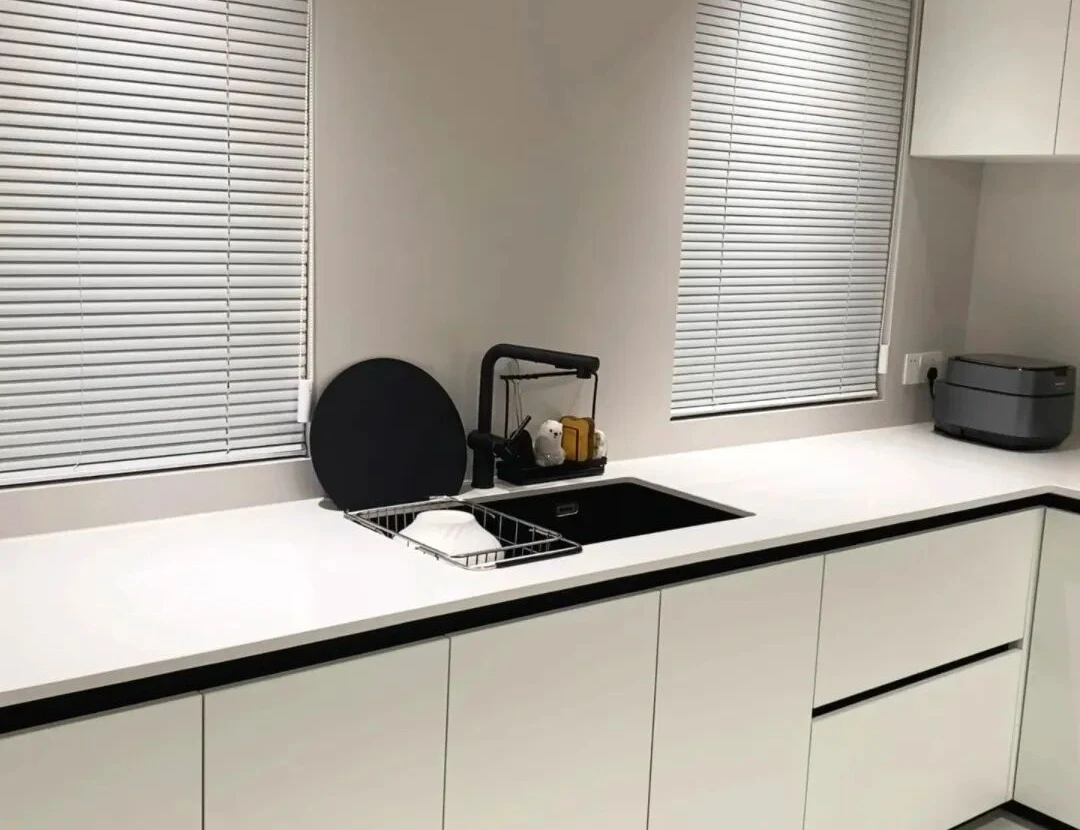
A no-water-barrier design is a must. With this design, the countertop is directly attached to the wall tiles and treated with grout sealing, leaving no dead corners and being easier to clean than the conventional water barrier.
With the no-water-barrier design, matching it with a no-overhang design will create a concise and refreshing kitchen space.
Countertop Thickness
Common thicknesses are 15mm and 20mm. The regular thickness is 15mm; if you want to adopt the no-overhang design, a 20mm thick countertop will be more aesthetically pleasing. Generally, the thicker the countertop, the higher the price, which can be determined according to your needs.
Sink Installation Methods
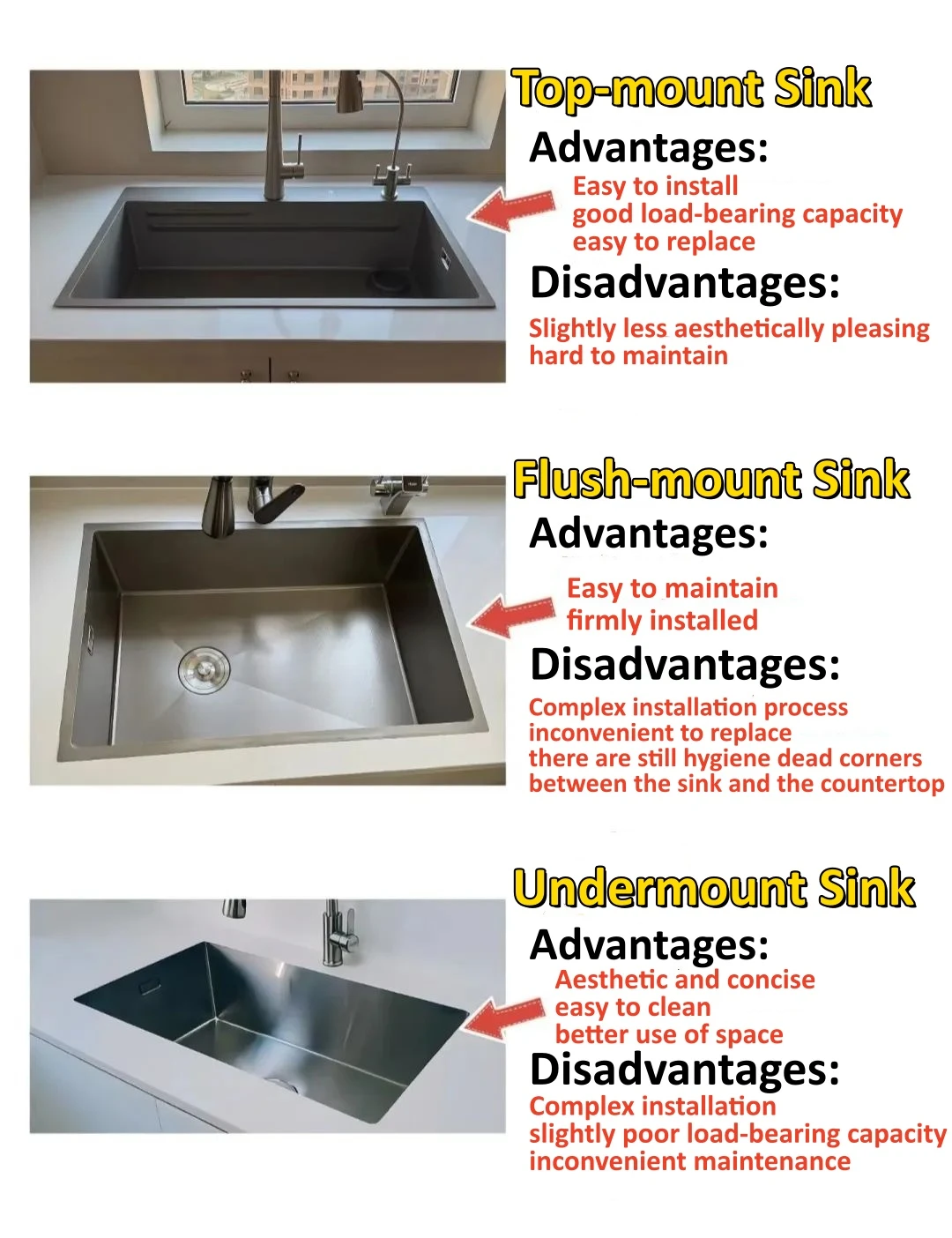
There are three main sink installation methods: top-mount sink, flush-mount sink and undermount sink. Cabinet installers said that although the installation process of flush-mount sink is complex, it is more stable than undermount sink.
Cabinet Body & Door Materials
1. Base Materials
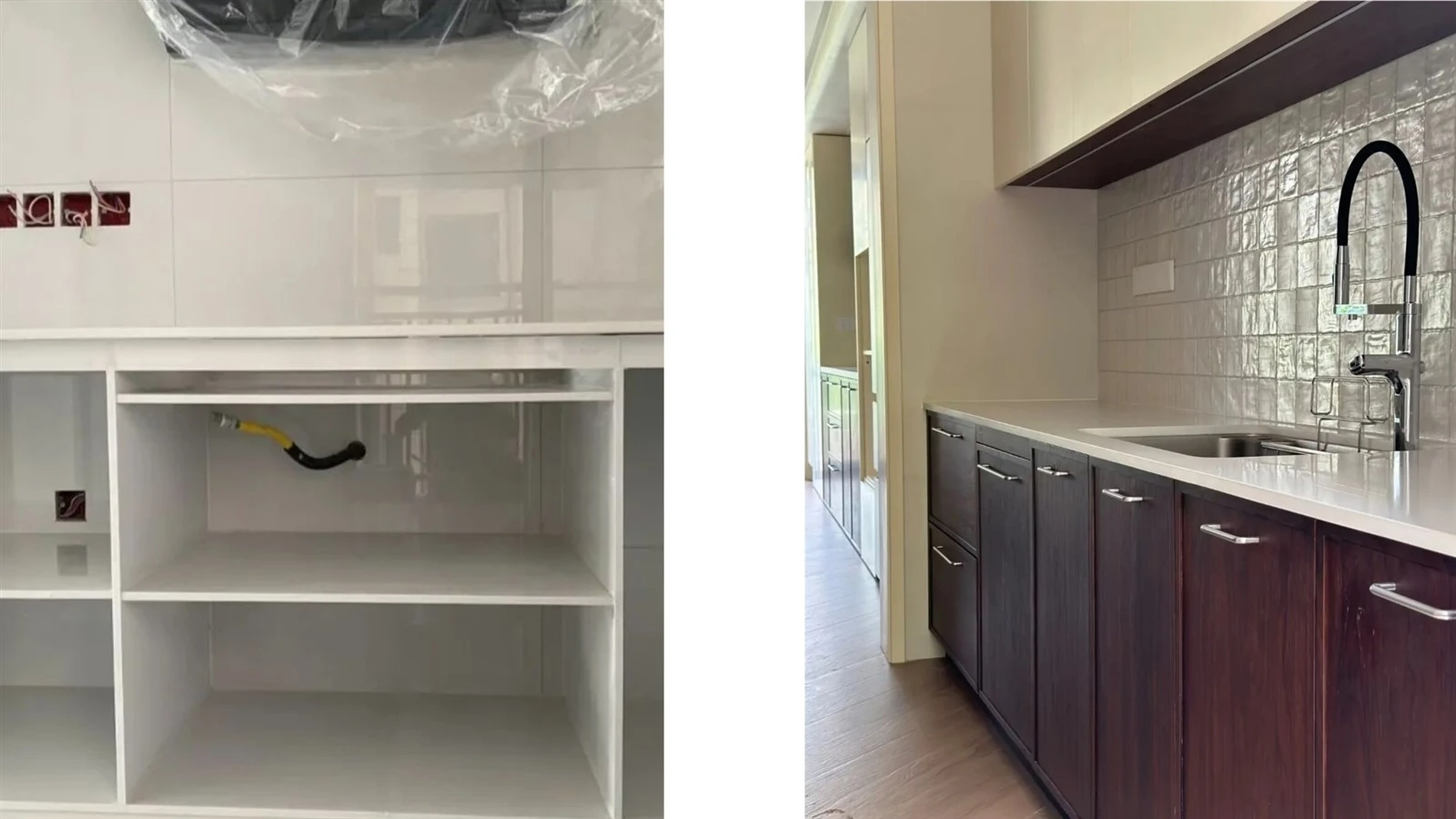
Common base materials for cabinet bodies are divided into multi-layer solid wood and stone cabinet bodies, and the cabinet doors are OSB (Oriented Strand Board) doors.
Left figure is a stone cabinet body. This kind of white stone cabinet body is quite popular in practical use, featuring cleanliness and durability. For the bottom panel of the wall cabinet, you can choose a stain-resistant color; the white cabinet bottom panel cannot resist oil fume stains and is prone to yellowing over time.
2. Surface Materials
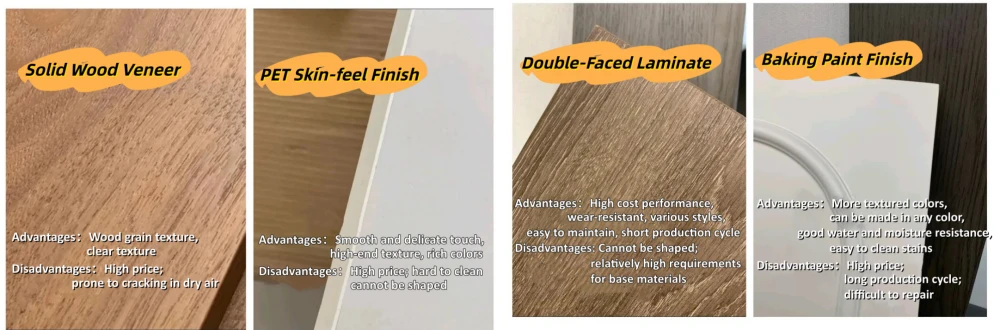
Surface materials of cabinets include PET skin-feel finish, PET high-gloss finish, double-faced laminate, baking paint finish, etc. The commonly used one is double-faced laminate, while PET, baking paint and solid wood veneer are relatively more expensive.
3. Door Handles
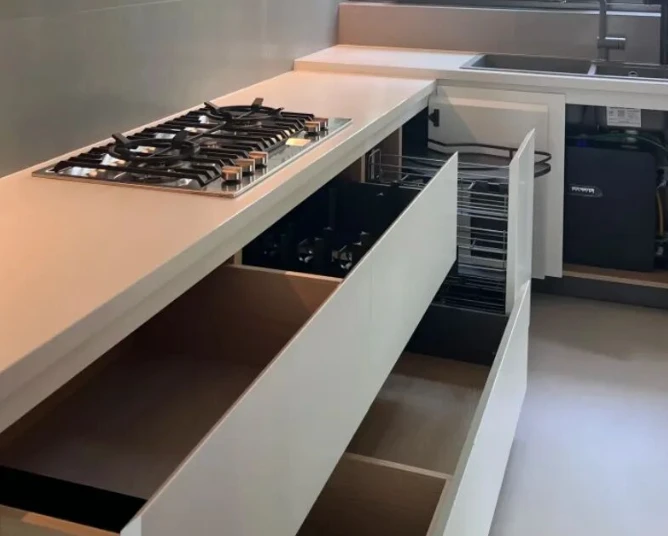
Generally, we recommend beveled door edges with a handle-free design, which is simple and easy to clean.
4. Additional Lighting Consideration
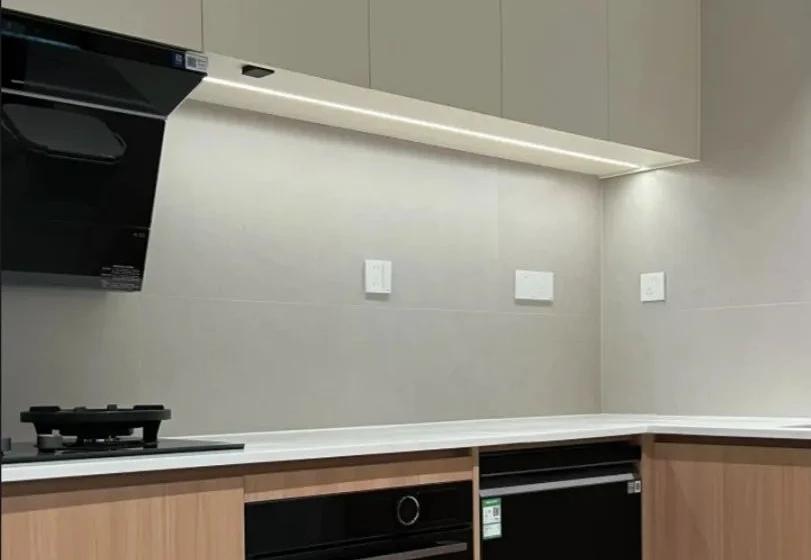
During the plumbing and electrical renovation stage, reserve a power source for LED lights under the wall cabinet in advance. This linear light supplements the lighting on the kitchen countertop, providing higher illuminance when chopping vegetables.
By keeping these key points in mind, you can make more rational choices when purchasing kitchen cabinets that suit your needs. A well-selected kitchen cabinet not only enhances the beauty of your kitchen but also improves your daily cooking experience!