


MDF, Particle Board, or Plywood: Which Cabinet Material Is Right for Your Project?
Aug 12, 2026
Leave a message
When choosing custom cabinets, many people focus on the design, color, and finish. However, the material inside the cabinet plays a major role in determining durability, stability, appearance, and overall performance.

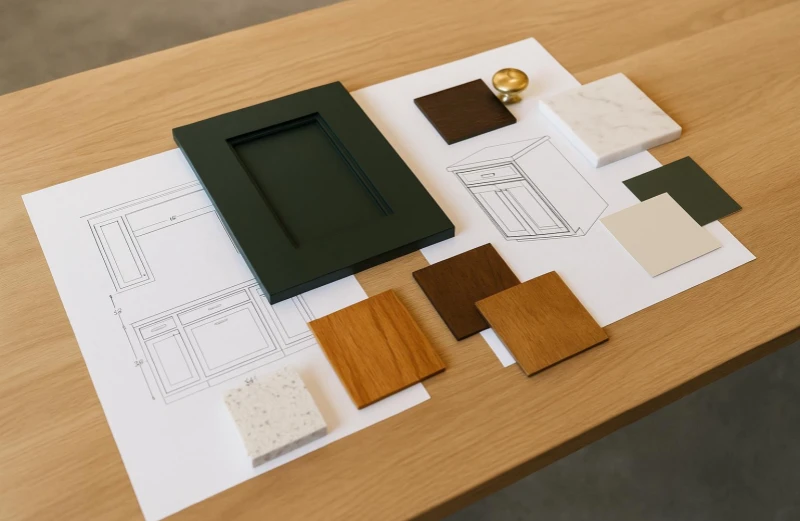
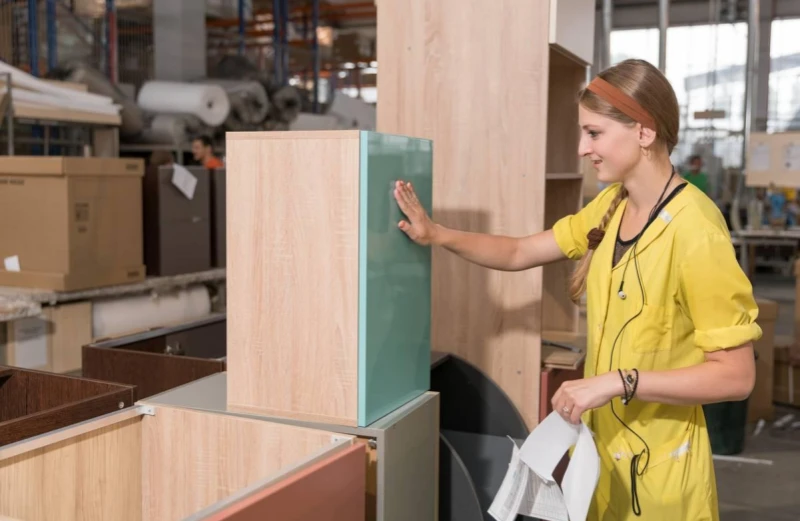
For builders, designers, and homeowners, choosing the right cabinet material is an important step before starting any project.
Among the most commonly used materials in cabinet manufacturing are:
- MDF (Medium Density Fiberboard)
- Particle Board
- Plywood
Each material has its own advantages and is suitable for different applications.
The best choice is not always the most expensive option - it depends on the project requirements, design style, and usage environment.
MDF: Smooth Surface and Design Flexibility
What Is MDF?
MDF (Medium Density Fiberboard) is an engineered wood panel made from refined wood fibers combined with resin and compressed under high pressure.
Because of its smooth and uniform surface, MDF is widely used in modern cabinet manufacturing.

Advantages of MDF:
✔ Excellent Surface Finish
MDF provides a smooth surface that works well with:
- Paint finishes
- Decorative coatings
- Modern flat-panel designs
✔ Easy for Detailed Processing
Its consistent structure makes it suitable for:
- CNC cutting
- Routed patterns
- Custom door designs
✔ Stable Appearance
Compared with natural wood, MDF has a more consistent surface with fewer natural defects.
Common Applications:
- Painted cabinet doors
- Decorative panels
- Modern furniture designs
Particle Board: A Cost-Effective Cabinet Solution
What Is Particle Board?
Particle board is made from compressed wood particles combined with adhesive.
It is commonly used in furniture manufacturing because it provides a practical balance between cost and performance.

Advantages of Particle Board:
✔ Cost Efficiency
Particle board is often selected for projects that require:
- Budget control
- Large-scale production
- Efficient manufacturing
✔ Good Surface Compatibility
When combined with melamine finishes, particle board can provide:
- Clean appearance
- Easy maintenance
- Various color options
Common Applications:
- Cabinet interiors
- Shelving
- Residential furniture projects
Important Consideration:
The quality of particle board depends on:
- Density
- Surface finishing
- Edge sealing technology
Professional processing is essential for long-term performance.
Plywood: Strength and Structural Performance
What Is Plywood?
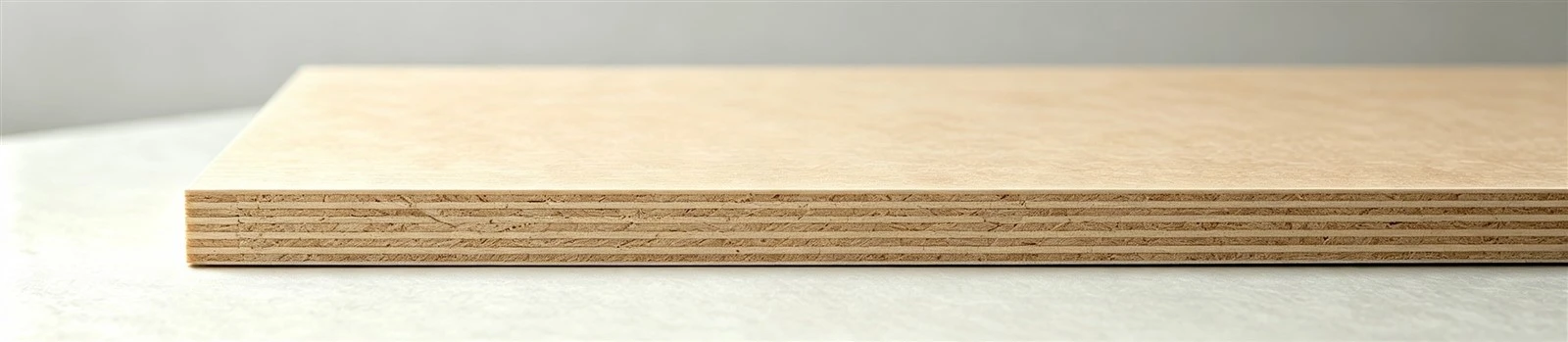
Plywood is made by bonding multiple layers of wood veneer together with alternating grain directions.
This layered structure provides strong mechanical performance.
Advantages of Plywood:
✔ High Strength
Plywood offers excellent:
- Structural stability
- Screw holding ability
- Load-bearing performance
✔ Suitable for Heavy-Use Areas
It is often considered for:
- Kitchen cabinet boxes
- Storage systems
- High-end residential projects
Common Applications:
- Cabinet carcasses
- Shelves
- Premium furniture structures
MDF vs Particle Board vs Plywood: Quick Comparison
| Feature | MDF | Particle Board | Plywood |
|---|---|---|---|
| Surface Finish | ⭐⭐⭐⭐⭐ | ⭐⭐⭐⭐ | ⭐⭐⭐⭐ |
| Strength | ⭐⭐⭐ | ⭐⭐ | ⭐⭐⭐⭐⭐ |
| Cost | Medium | Lower | Higher |
| Design Flexibility | Excellent | Good | Good |
| Structural Performance | Good | Medium | Excellent |
| Common Use | Cabinet doors | Cost-effective furniture | Cabinet structures |
Which Material Is Best for Kitchen Cabinets?
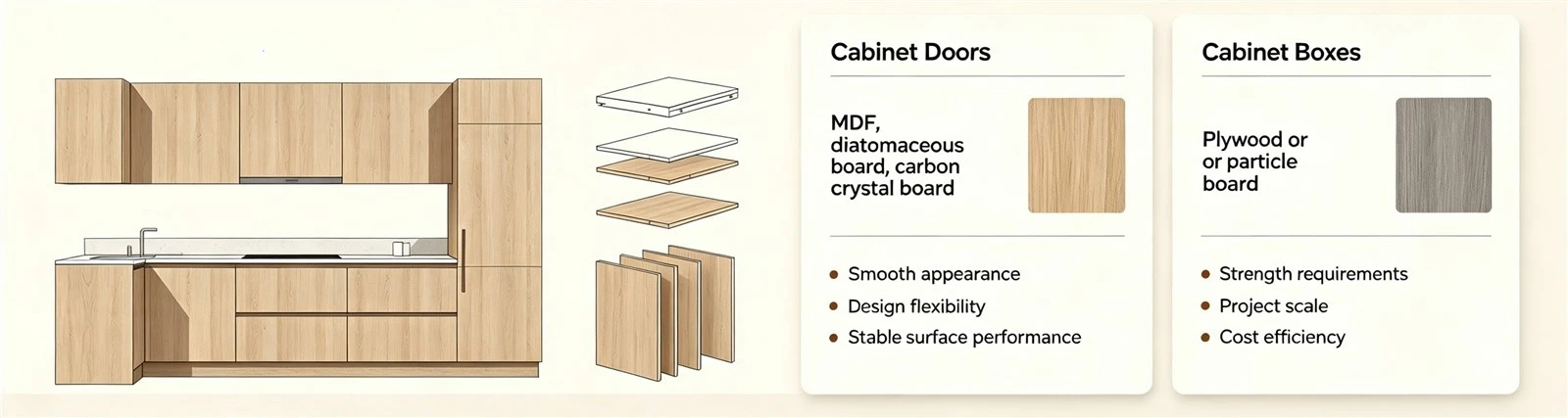
No single material suits all cabinet projects. Professional manufacturers choose materials by component: MDF is widely used for cabinet doors for its smooth surface, paintability and flexible design options, while plywood or particle board are considered for cabinet boxes according to project demands, budget, local standards and usage needs. A good cabinet system matches proper materials to different functional parts.
How to Choose the Right Cabinet Material for Your Project?
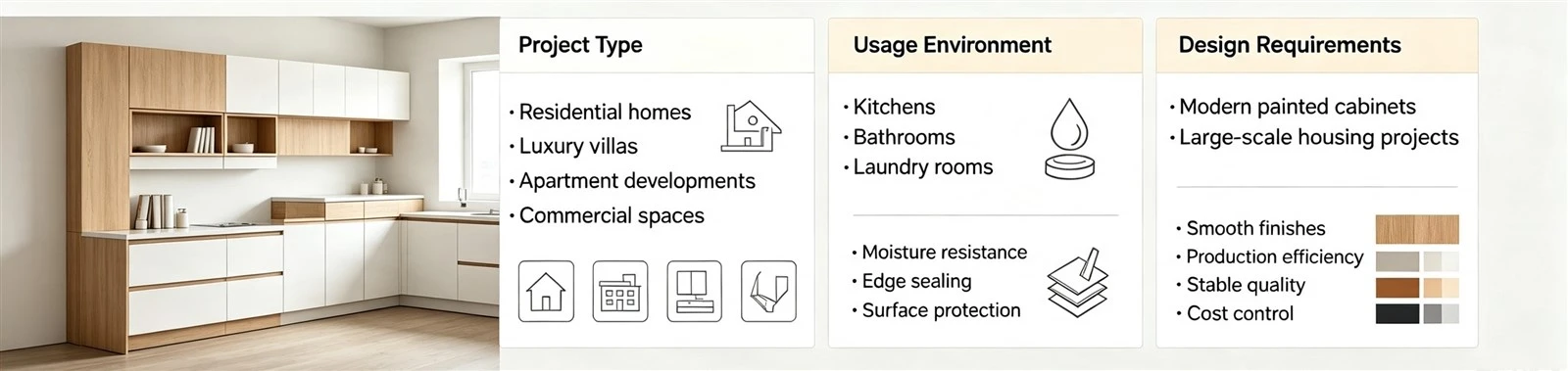
When choosing cabinet materials, consider your project type (residential homes, villas, apartments or commercial spaces), usage environment - kitchens, bathrooms and laundry rooms demand moisture resistance, good edge sealing and surface protection - as well as design needs: painted cabinets require smooth surfaces, whereas large-scale housing projects focus on production efficiency, stable quality and cost control.
SNEJ Custom Material Solutions
At SNEJ, we understand that every project has different requirements.
Instead of using one material for every application, we provide customized solutions based on:
- Design style
- Project needs
- Usage environment
- Market requirements
Our solutions include:
✓ Custom kitchen cabinets
✓ Wardrobes
✓ Interior doors
✓ Whole-home customization
From material selection to precision manufacturing, SNEJ helps global partners create reliable and high-quality furniture solutions.
Conclusion
Choosing the right cabinet material is about finding the best balance between:
- Appearance
- Durability
- Functionality
- Budget
MDF, particle board, and plywood each have unique advantages. Understanding their differences helps builders, designers, and homeowners make better decisions for every project.
A professional cabinet manufacturer can provide the right material combination to achieve both design goals and long-term performance.