


Designing a Closet? Avoid These 9 Common Mistakes!
Nov 19, 2025
Leave a message
Don't build a wardrobe blindly - follow these 9 must-know tips to make it actually useful.
A lot of people just let their designer handle the wardrobe, but many designers rely on standard templates. It might look fine in the renderings, but once you move in, you'll notice all kinds of little issues. That's why you need to talk things through with your designer or carpenter before they start building.
There are 9 tips and 9 pitfalls - skip a few, and your wardrobe might not turn out as practical or stylish as you want.
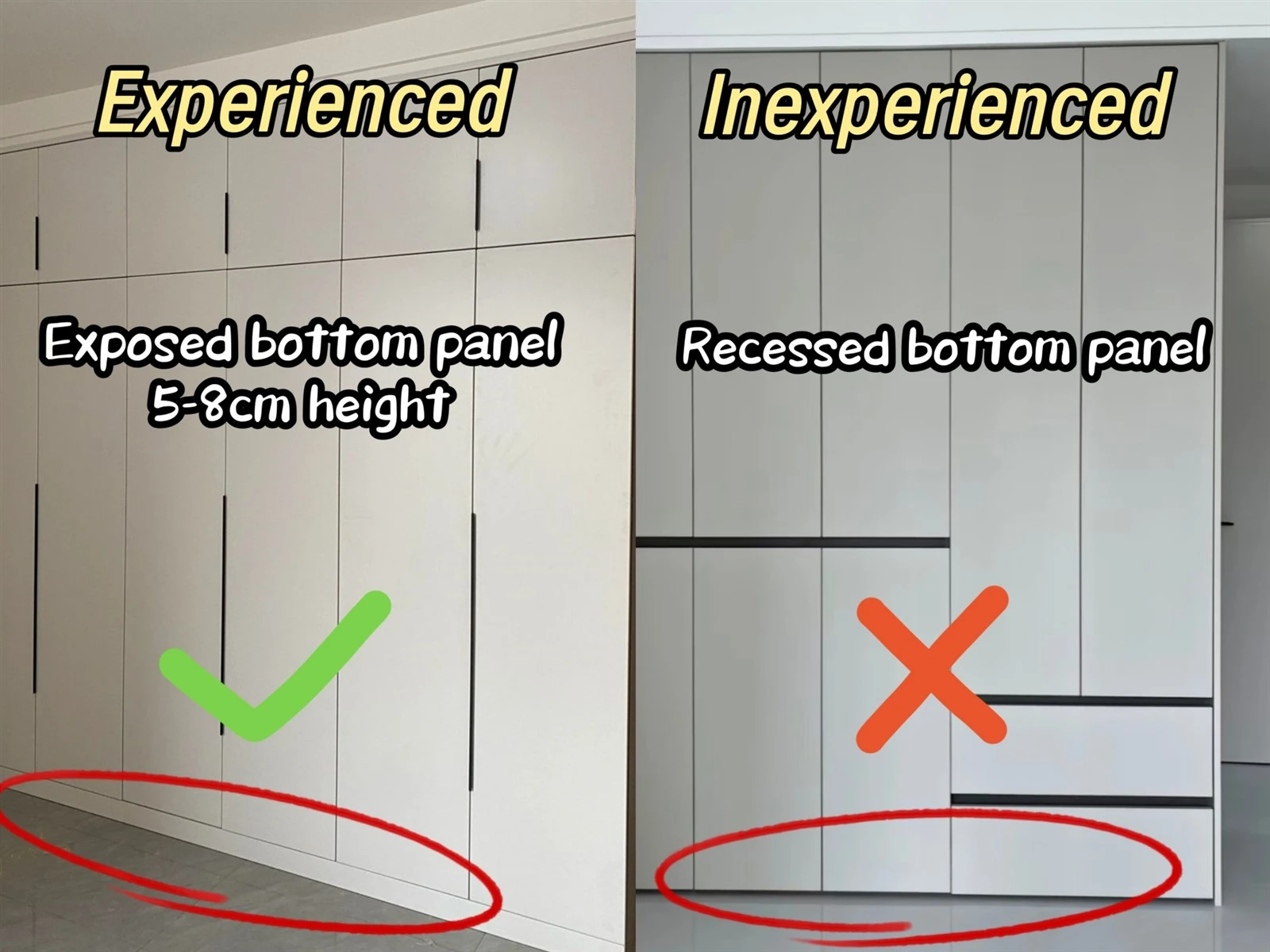
bottom panel
For wardrobe design, an exposed bottom panel (5–8 cm) is generally the better choice. It provides stronger support, keeps the cabinet more stable, and lifts the structure off the floor to reduce moisture issues. It also makes leveling easier during installation, ensuring straighter lines and smoother door alignment. Overall, an exposed bottom panel offers better durability, moisture protection, and long-term performance compared to a recessed one.
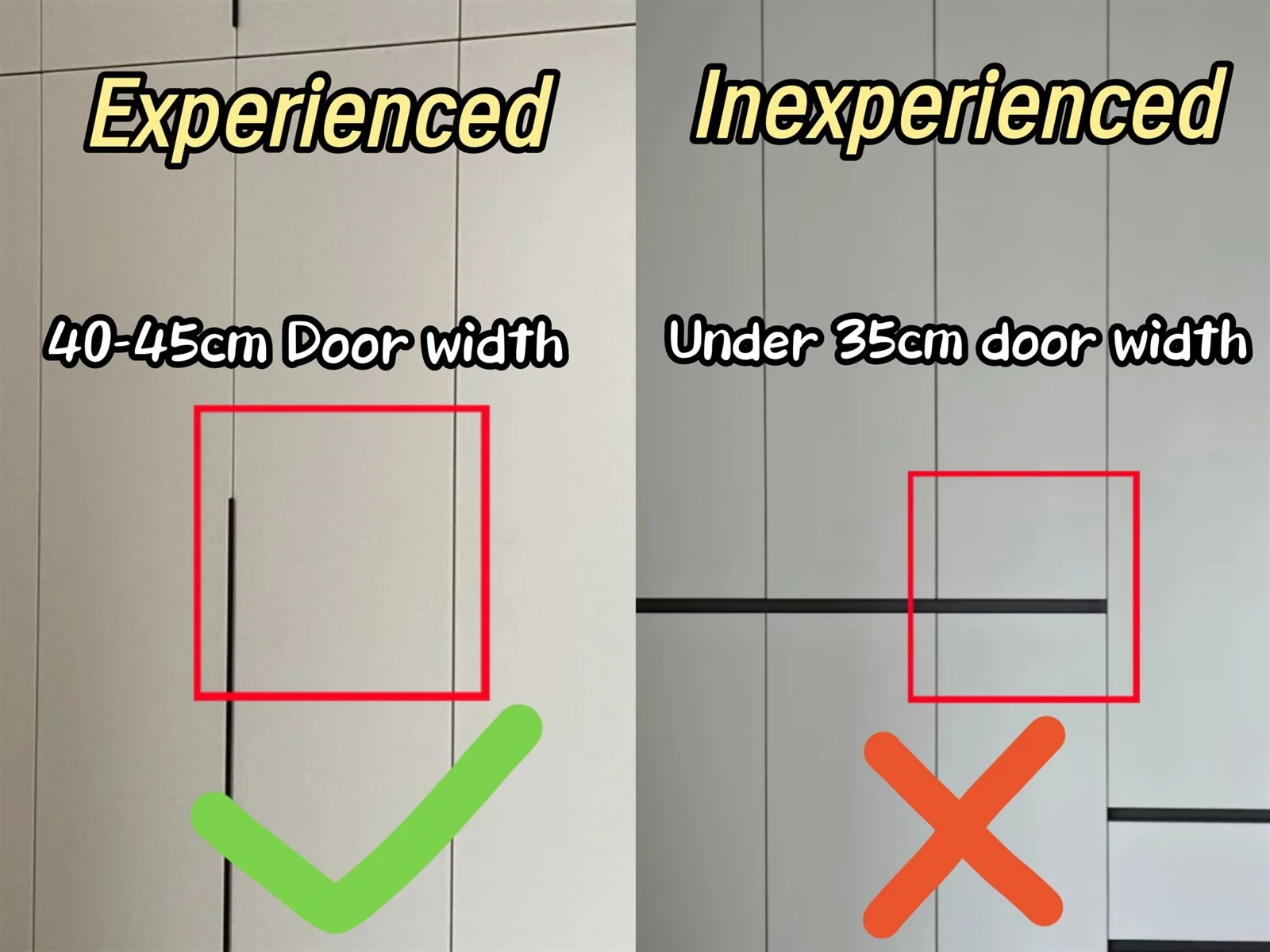
Door width
The ideal width for a wardrobe door is 40-45cm. If the door width is under 35cm, the exposed space inside the wardrobe after opening is limited, making it hard to stretch your arm to reach items in the back. A 40-45cm width ensures you can easily access all areas inside after opening the door, plus it distributes force evenly across the door-so it's less prone to deformation with long-term use and opens/closes stably without wobbling.
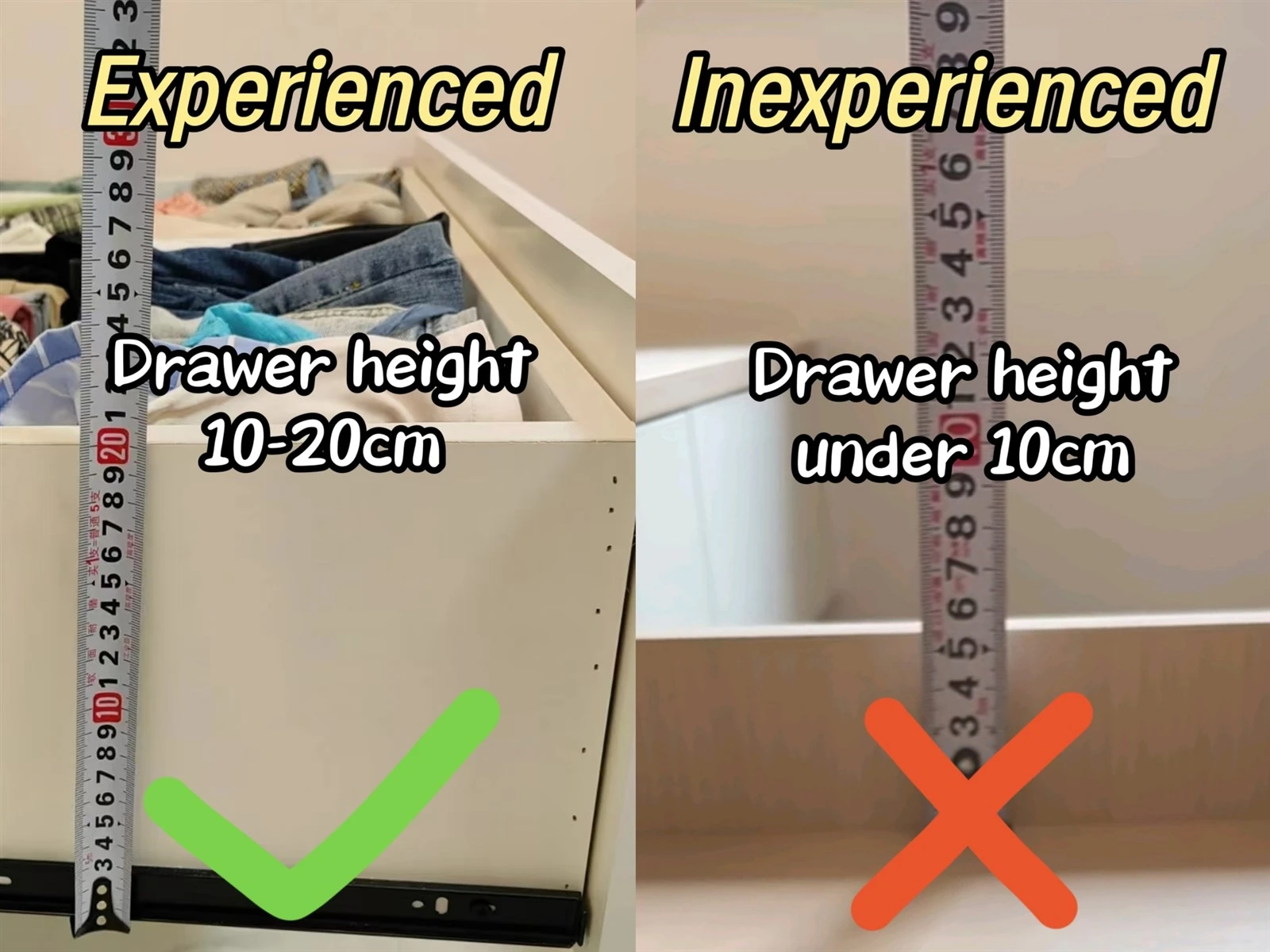
Drawer Height
It's recommended to keep drawer height between 10-20cm. If the height is under 10cm, the capacity is too small-you can only store a few lightweight items, and you'll have to open multiple drawers frequently to find things, which is inefficient. A 10-20cm height is perfect for storing small items like underwear and socks: it prevents items from being stacked and hard to find (which happens with overly deep drawers) and reduces the number of drawers needed, saving cabinet space.
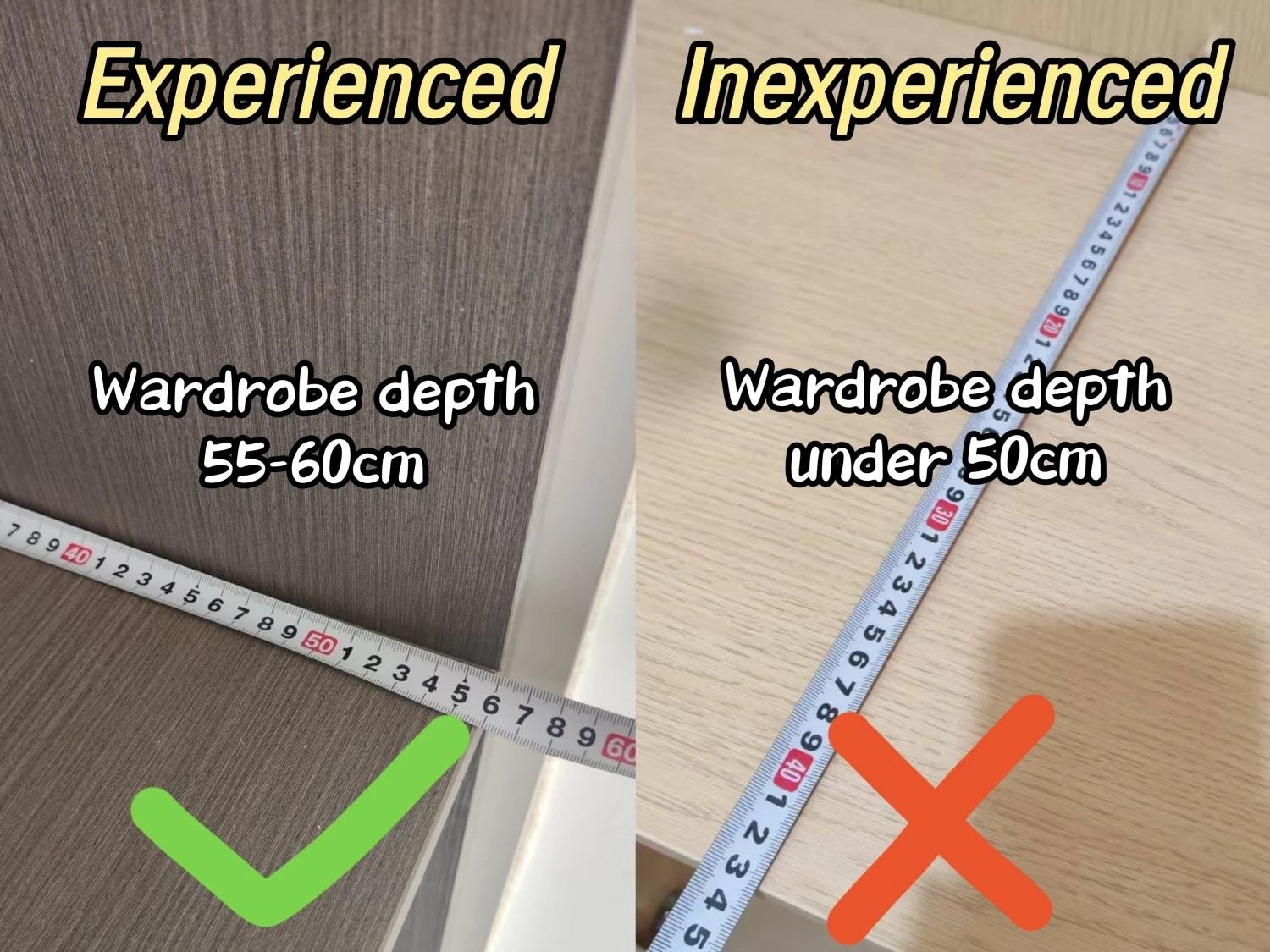
wardrobe depth
The ideal wardrobe depth is 55-60cm. If the depth is under 50cm, it won't accommodate the thickness of a hanger plus clothes-your clothes will stick out past the door, which won't close properly, and the clothes will easily get crinkled from being squeezed. A 55-60cm depth matches the thickness of standard hangers (with clothes) perfectly: clothes hang flat without sticking out, the door closes smoothly, and you can use the extra depth to stack items next to the hanging area, boosting storage efficiency.
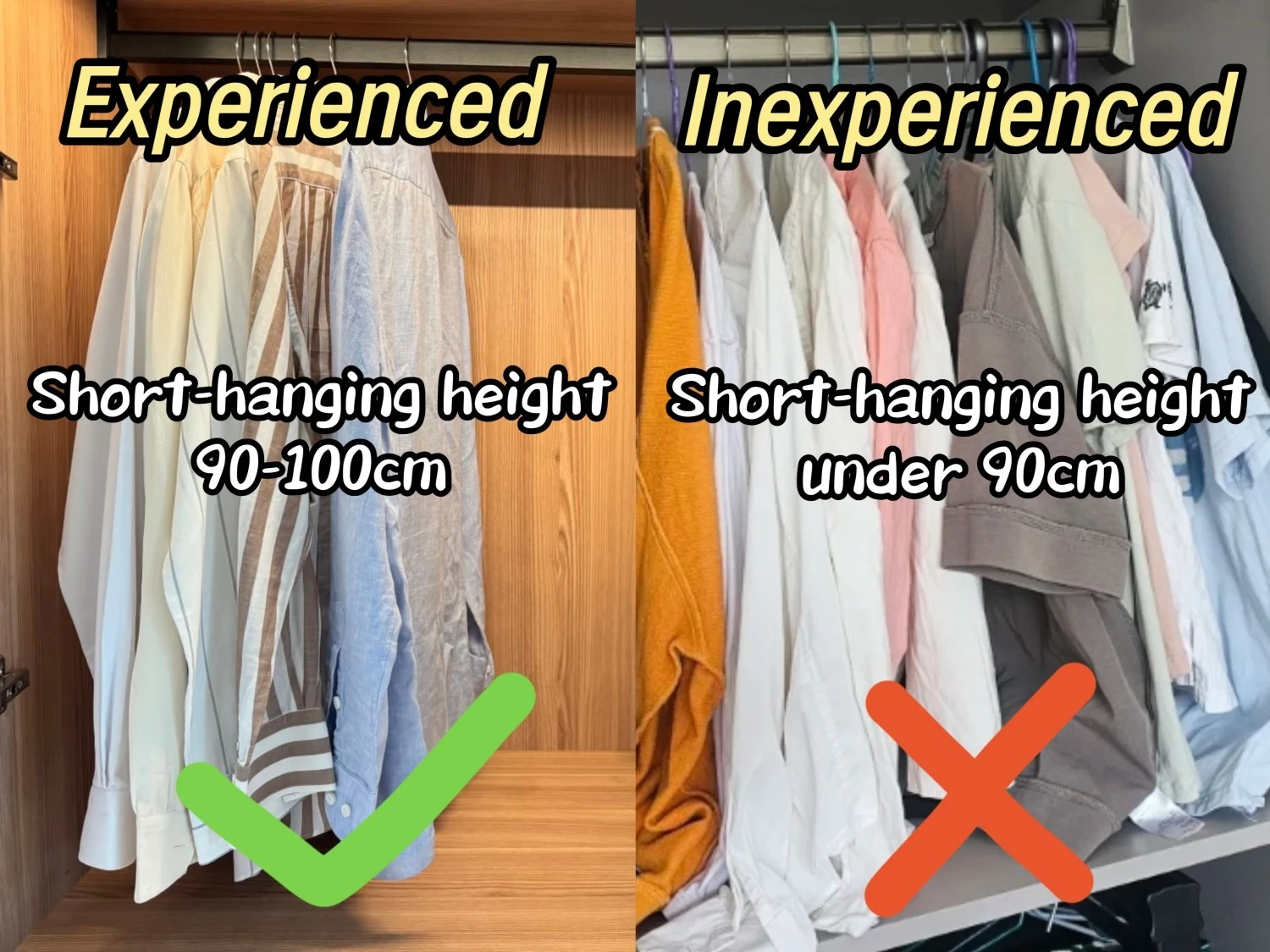
short-hanging height
The ideal height for a short-hanging section is 90-100cm. If it's under 90cm, the hems of short garments (like shirts or short-sleeves) will hit the area below-they'll get dirty or wrinkled easily, and you might snag them when grabbing items. A 90-100cm height fits short garments perfectly: there's a gap between the hems and the lower area, keeping clothes smooth, and you can pull items out easily without bending to avoid obstacles.
long-hanging height
A long-hanging section needs a height of 140-150cm. If it's under 140cm, long garments (like coats or maxi dresses) won't fit fully-they'll drag on the floor, getting dirty or wrinkled, and you might even be unable to close the wardrobe door. A 140-150cm height fits long garments perfectly: the pant hems or dress skirts will have a small gap from the floor, staying clean and neat, and you won't need to adjust the length when grabbing them.


pants rack height
It's recommended to set the pants rack height to 80-85cm. If it's under 70cm, pant hems will drag on the floor-they'll get dirty and wrinkled, take up floor space, and you might step on and dirty the pants when grabbing them. An 80-85cm height lets pants hang naturally without touching the floor; it also fits multiple pairs of pants hung neatly, so you can see everything at a glance and organize them more efficiently.
rod-to-shelf distance
Leave a 5-6cm gap between the hanging rod and the shelf above. If the gap is under 5cm, the top of the hanger will get stuck-you'll have to force the hanger in or yank it out, which is a hassle and can wear down the shelf and hanger. A 5-6cm gap fits the top of standard hangers perfectly: you can hang and pull out clothes smoothly without jamming, and it avoids friction and wear between the hanger and the shelf.


wardrobe-to-bed distance
Keep at least 60cm between the wardrobe and the bed. If the space is under 60cm, opening the wardrobe door will hit the bed-you'll have limited movement space when grabbing clothes, and you might bump into furniture or get pinched by the door. A gap over 60cm leaves enough room to move: you can open the door and grab clothes with a smooth movement path, no need to awkwardly avoid obstacles, making daily use more comfortable and safe.