Custom Cabinets: Don’t Get Tricked!
Mar 05, 2026
Leave a message
For homeowners, the part that requires the most thought during renovation is definitely storage cabinets.
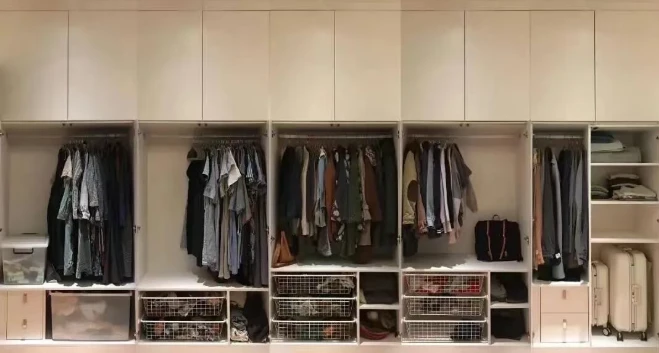
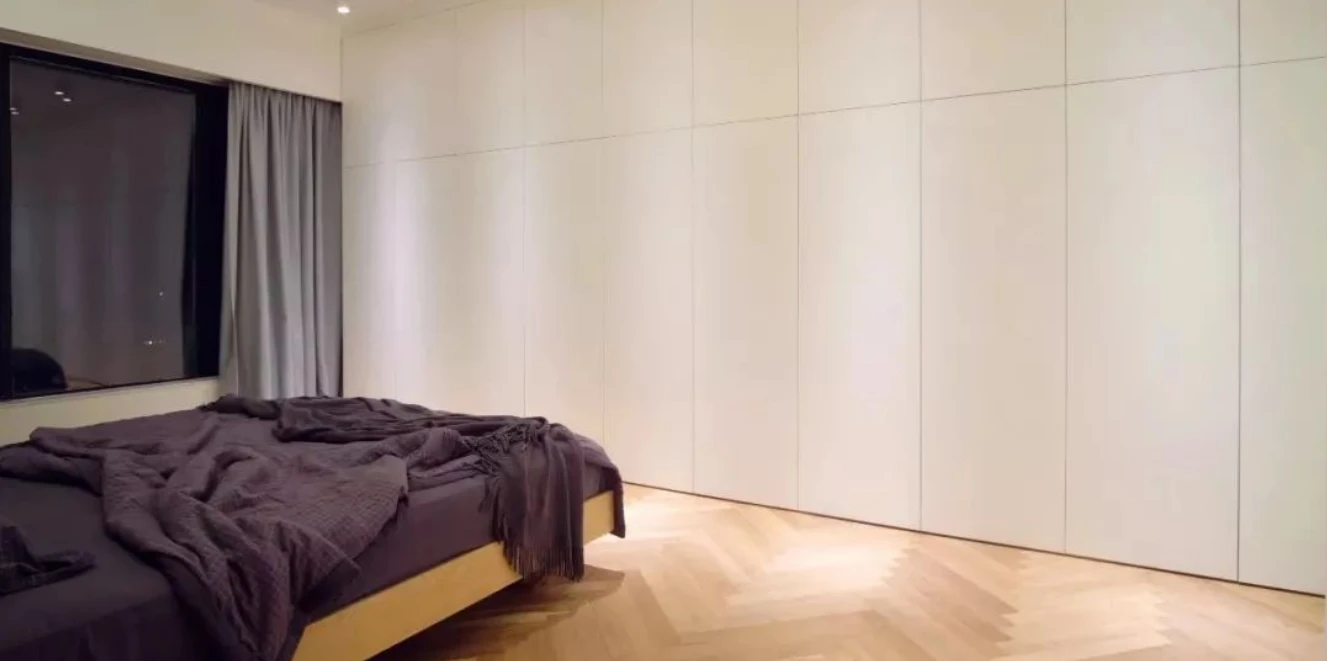
In recent years, almost every household has installed hidden cabinets. The floor-to-ceiling design not only makes full use of every space in the home, perfectly solving the storage problem of small-sized houses, but its simple and high-end appearance is also deeply favored by homeowners of large-sized houses.
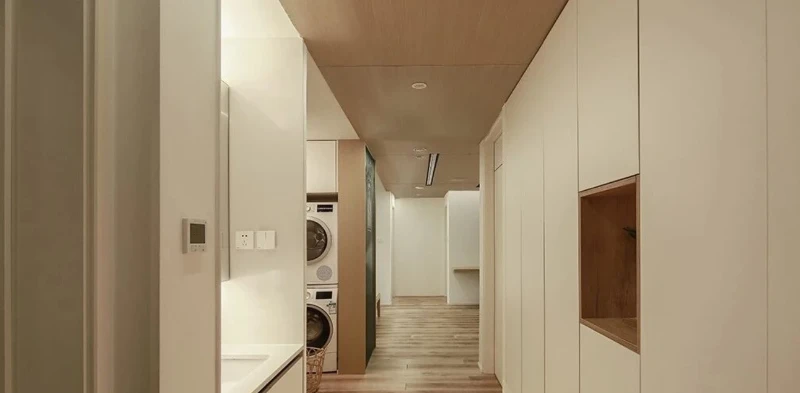
Large storage capacity, low visual presence, clean facade and easy maintenance-this is exactly what it is.
However, if you want to install hidden cabinets well, it is easy to step on pitfalls during the customization process.
The following super practical pit-avoidance guide is recommended to be collected directly. The more pitfalls you can avoid, the better!
01 Who is More Reliable for Customization
Unless you yourself understand design, have ample time and are professional, it is not recommended to casually find a carpenter to make it on site. Good carpenters are hard to find, and once it is done poorly, it is difficult to remedy. To reduce risks, prioritize brand customization-brands with a good reputation often offer higher cost performance.
02 Whole-House Customization ≠ All Cabinets Made Together
"Whole-house customization" is mainly suitable for large storage cabinets, such as entrance cabinets, wardrobes, TV cabinets, utility cabinets, kitchen cabinets, tatami mats, etc. Brands focusing on wardrobes are not necessarily good at kitchen cabinets. It is recommended to choose brands with stronger comprehensive capabilities that can take into account the whole-house design.
03 How to Choose Plates Without Stepping on Pitfalls
There is no such thing as "zero formaldehyde" in environmental protection. The key is to check the formal national standard test report: the higher the level (E1, E0, ENF), the more environmentally friendly it is, and it is sufficient to cooperate with more ventilation.
Comparison of common plates:
- Multi-layer board: Moisture-proof and stable, suitable for making cabinet bodies, with a relatively high price.
- Particle board: The most widely used, stable, easy to process, and cost-effective.
- MDF (Medium Density Fiberboard): Beautiful in shape, suitable for making cabinet doors, not moisture-proof, and not recommended for kitchen and bathroom spaces.
04 How to Open Handleless Hidden Cabinets
The handleless design is more minimalist and safer, which can avoid collisions. The common opening methods are as follows:
Leave a Gap
Leave about a 2 cm gap between cabinet doors so fingers can easily reach in. This allows the doors to be opened without handles.
For full-height cabinets, if you're concerned that large doors may feel heavy or hard to pull, you can create a wider recessed grip by cutting the door panel to form a deeper groove handle.
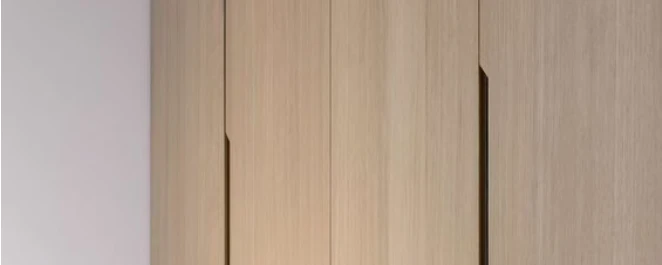
For layered cabinets, the gap can be positioned above the lower cabinet door for a cleaner and more refined look.
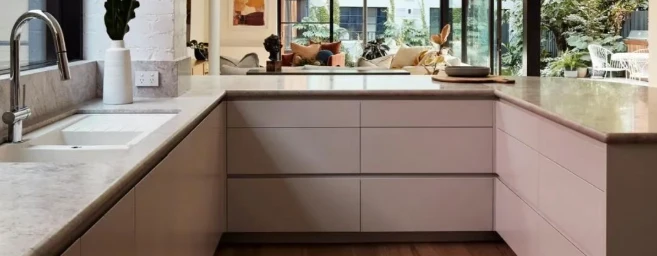
Recessed (Grooved) Handle
This hidden handle design is created by cutting a groove directly into the cabinet door. Although the surface is not completely flat, it does not affect the overall appearance. A specially cut recess in the cabinet or door panel serves as a grip point, making it easy to open.
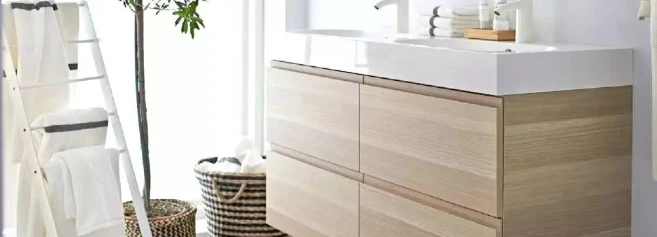
Extended Edge
Extending one edge of the panel to function as a handle works well for wall cabinets, floating TV consoles, and drawer units with one exposed side.
Simply extend the edge about 2 cm beyond the bottom panel. When opening, the extended edge becomes the grip point for pulling the door open.
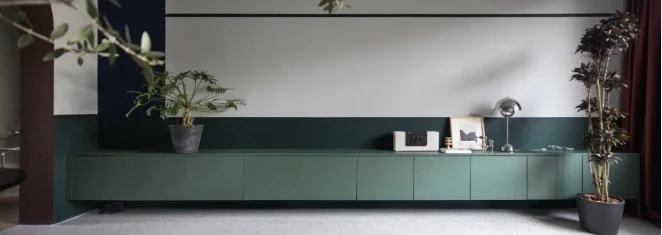
Corner Cut or Drilled Opening
If you prefer not to leave gaps or cut grooves between doors, you can opt for corner cuts or drilled finger holes. This method is suitable for bookcases or small cabinets.
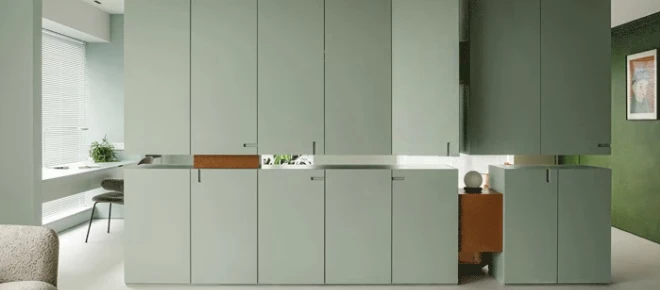
Push-to-Open Mechanism
The most common and minimalist solution is the push-to-open mechanism. Cabinets with this system feature completely clean door panels without visible handles, eliminating concerns about gaps or grooves collecting dust.

However, one drawback is that the mechanism may wear out over time with frequent use. It is best suited for cabinets that are not opened and closed often. Fortunately, the component is affordable and easy to replace. Choosing a high-quality push latch can significantly extend its lifespan.
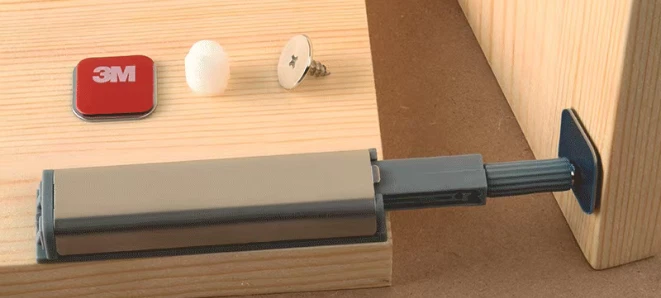
Tip: Always use a magnetic plate with the push mechanism to prevent long-term impact marks or dents on the cabinet door.
05 Don't Save Money on Hardware
A cabinet's usability and lifespan depend not only on good design but also on quality hardware. Trying to save money on hinges, slides, or other fittings often results in more issues later.
Hinges
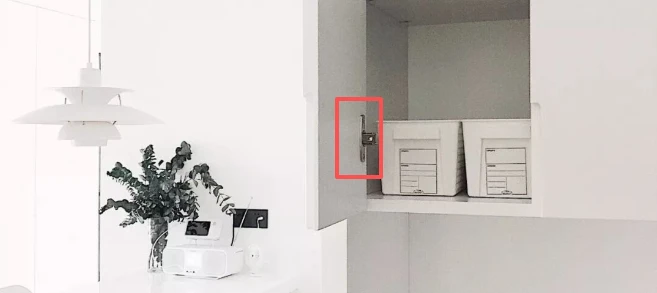
Hinges are the metal components that connect the cabinet door to the side panel. They not only ensure precise alignment between the cabinet and the door but also support the weight of the door. Since cabinet doors are opened and closed frequently in daily use, choosing high-quality hinges is essential.
Good hinges allow the door to open and close smoothly and quietly while remaining durable over time. If, after a period of use, the cabinet door no longer closes properly, becomes misaligned, feels difficult to open, or makes squeaking sounds, it is often a sign that the hinge quality is poor.
Hinges are generally divided into standard hinges and soft-close (damping) hinges. The biggest advantage of soft-close hinges is their quiet operation. Using a hydraulic mechanism, they provide a 3–6 second buffering action, allowing the cabinet door to close slowly and smoothly-even if you accidentally let go-preventing loud slamming.
Drawer Slides
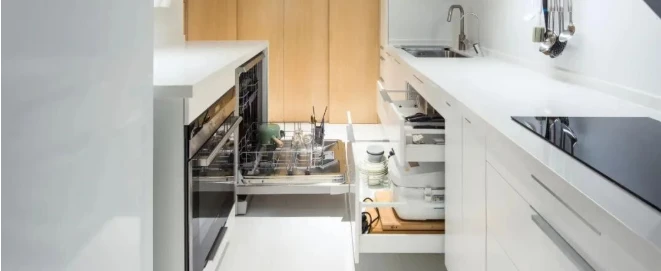
The smoothness of a drawer largely depends on the quality of its slides. This is especially true for kitchen drawers, where slides are one of the most important components. Kitchens are humid and prone to grease buildup, so low-quality slides can quickly become hard to push and pull, making daily use frustrating.
High-quality slides are not only quiet but also strong enough to handle heavy loads-60–70 lbs is usually no problem. Be sure to choose slides that match your drawer's size, and consult the seller before purchasing.
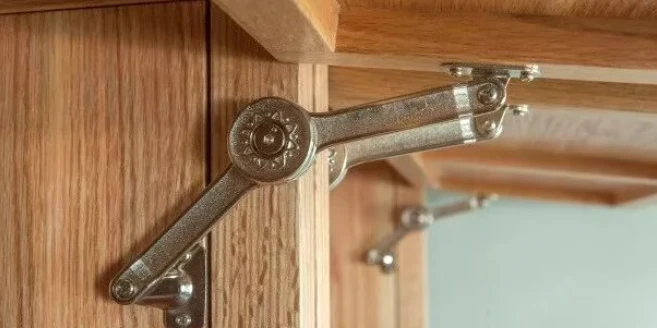
Support Rods (For Upward-Opening Cabinet Doors)
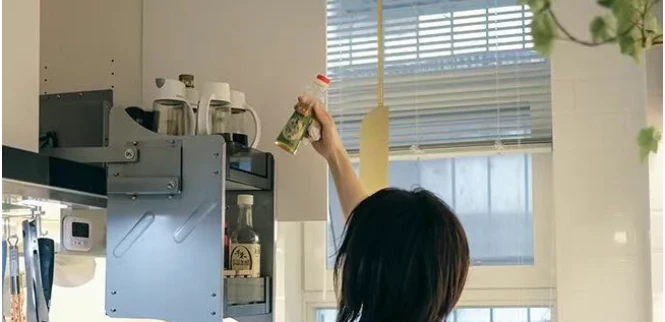
Many wall cabinets use upward-opening doors. In a busy kitchen, it's easy to forget the door is open and accidentally bump your head, so support rods are essential.
A highly recommended option is the friction-stop support rod. It holds the door wherever you leave it, so you don't have to climb on a stool to close it. This makes opening and closing upward-opening cabinets much safer and more convenient.
06 Be Serious About Measuring and Installation
Three parts product, seven parts installation. Floor-to-ceiling hidden cabinets have extremely high requirements for precision. Every step of measuring, re-measuring and installation must be strictly checked to avoid rework later.
07 Edge Banding is Crucial
Edge banding directly affects the environmental protection, moisture-proof effect and overall appearance of the cabinet. Prioritize ABS edge banding, which is more environmentally friendly and durable than PVC.
Edge banding effect from high to low: Laser edge banding > PUR edge banding > EVA edge banding
General budget: Use PUR edge banding for cabinet doors and EVA edge banding for cabinet back panels.
Sufficient budget/pursuing minimalism: Laser edge banding for cabinet doors + PUR edge banding for cabinet bodies.

08 How to Calculate the Price Without Being Ripped Off
Core of custom cabinet pricing: Be sure to ask clearly what is included and not included in the quotation, avoid hidden additional items in advance, and prevent disputes later.
09 The Contract Must Be Detailed
The contract is the homeowner's most powerful guarantee. Details such as plates, brands, models, colors, craftsmanship, installation time, warranty period, and hardware quality assurance-the more detailed they are written, the lower the probability of stepping on pitfalls.